For municipalities
Explore Social Living as part of local housing development: small private homes, shared meeting spaces and spaces for different life stages – on land and on water.
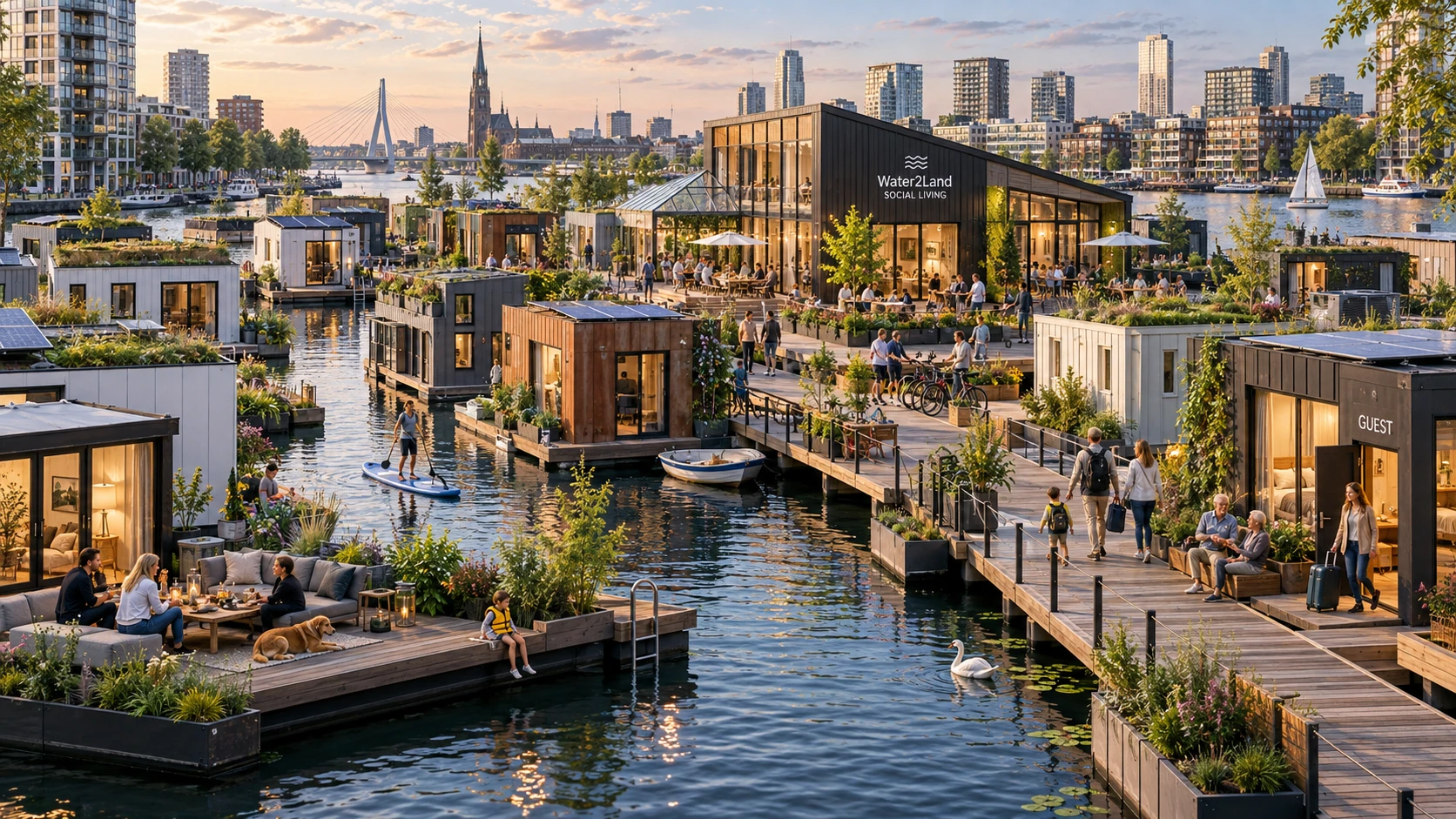
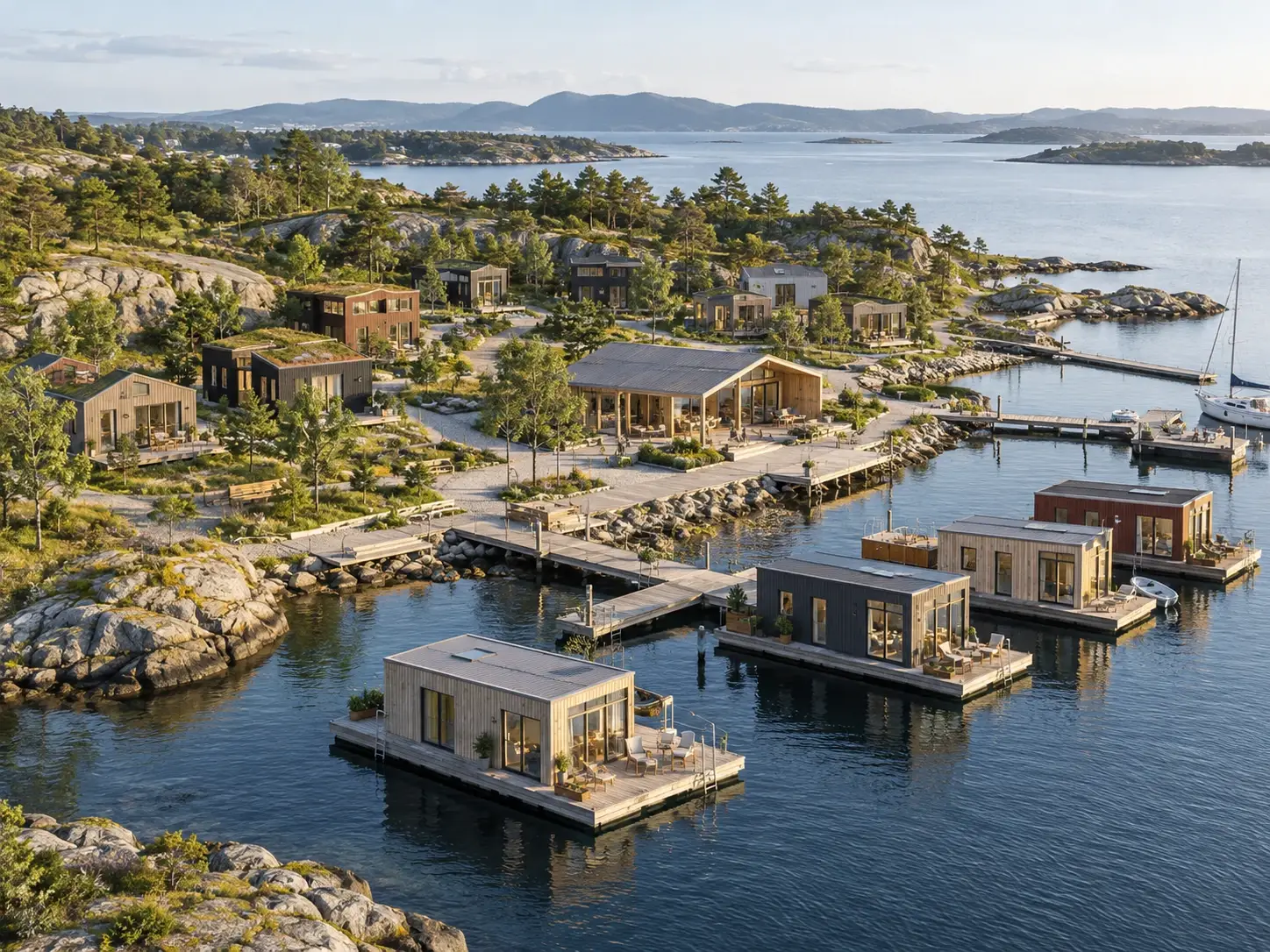
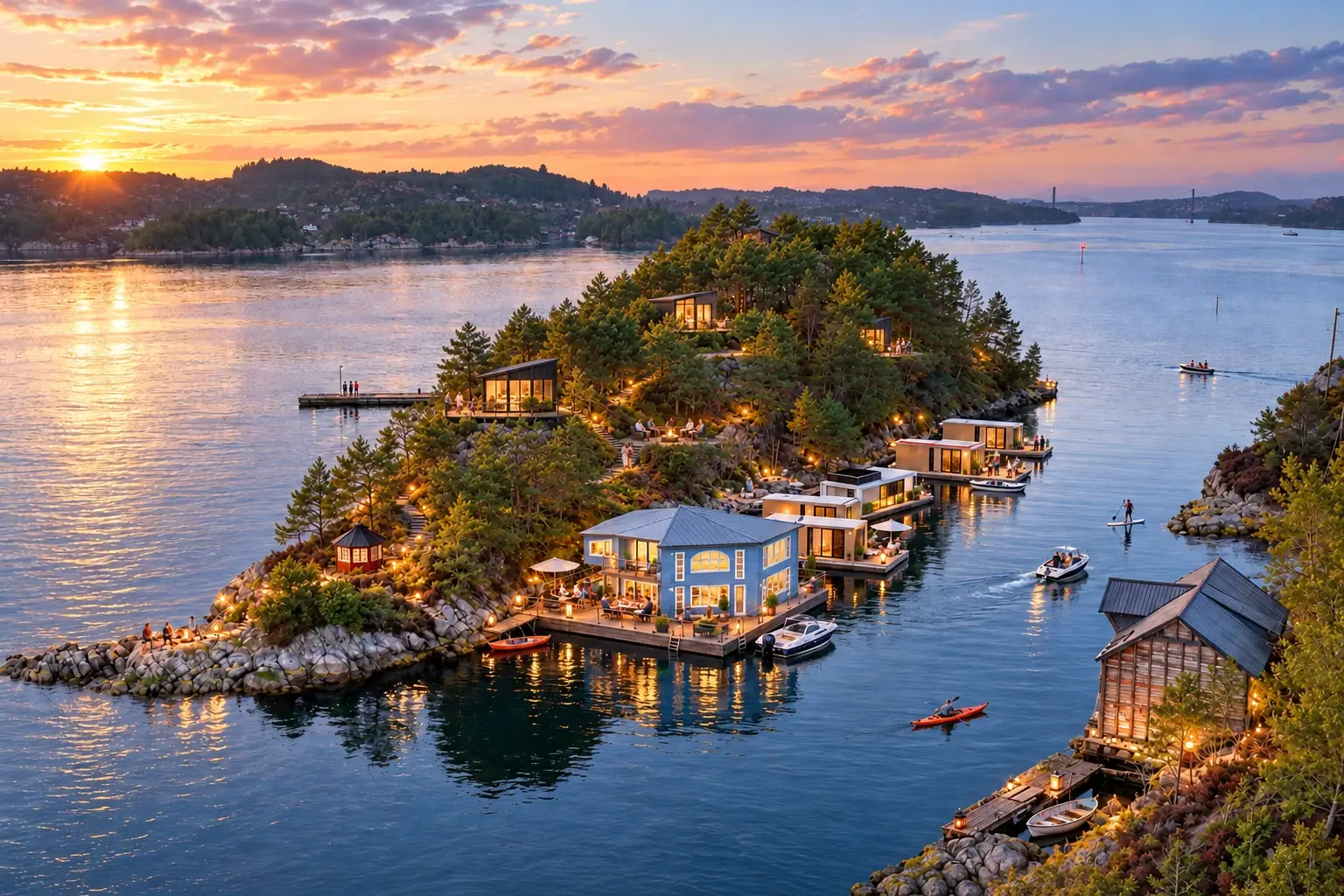
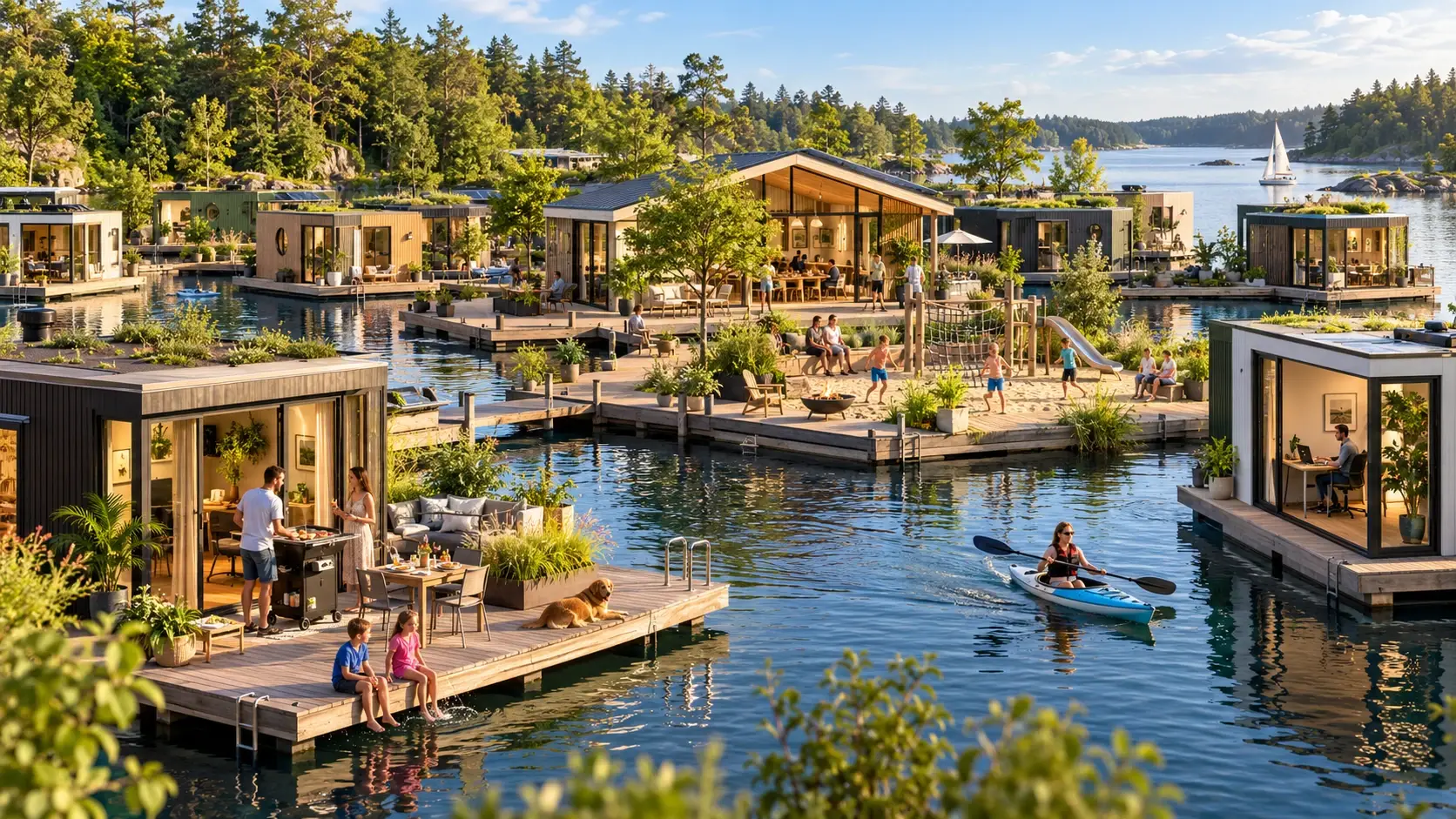
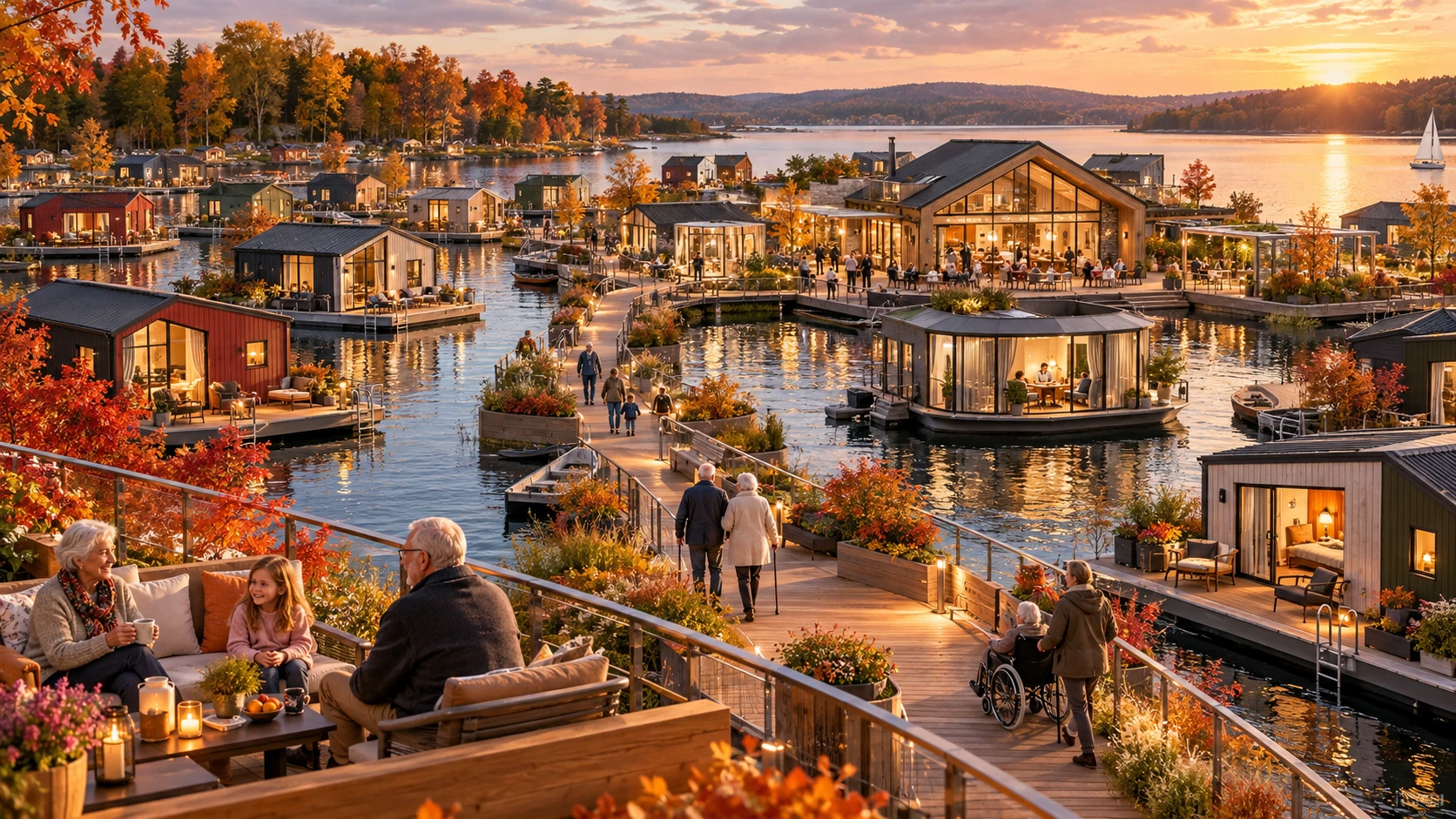
AI concept illustration · possible living environment. House models and solutions are clarified in the individual project.
Social Living is based on small private homes and access to more through shared facilities. City life, family life and a new phase of life create different needs for meeting places, activities and guest and work annexes. We will explore solutions on land and water together with the municipality and local project partners, adapted to the place and those who will live there.
Urban living environment, families by the lake and community across generations. Three different starting points for local project development. Use the arrows, or open the image in a larger format.
AI concept illustrations of possible living environments, not completed projects. House models and solutions are clarified for each project.
A small private home can be part of a larger living environment with meeting places and shared functions. We will develop solutions for students, seasonal workers and different life stages, among others, together with the municipality and local stakeholders. Leasing land can be an alternative to selling land.
Modular
Modular homes can allow for phased development and adaptation over time. Location, use and any time restrictions must be clarified with the municipality based on the plans for the area and the requirements of the project. A movable home does not automatically grant exemption or the right to a specific period of use.
Leases or other agreed usage rights may be applicable. Valuation, duration and liability must be clear.
Development, ownership, financing and operation are divided in the project agreements. The municipality's authority role is kept separate from any ownership role.
Cooperation
How the SPE model works
for municipalities
A separate project company can bring together the landowner, developer, professional communities and investors around a defined project. The municipality can contribute in various roles, but participation and form of agreement must be considered separately. Housing for students, seasonal workers and other local groups have different needs. Any use for a school or kindergarten must be planned and clarified as just that – not as ordinary housing.
Co-ownership for municipalities
A possible municipal ownership role is being assessed and agreed for the project.
Advantage
How Water2Land can help municipalities
We will combine small private homes with meeting spaces, guest annexes and local services. Before a project can be realized, needs, land use, infrastructure, feasibility and economics must be assessed collectively.
Zoning plans, application requirements and any exemptions must be considered for the site and its use. Modular construction does not replace these clarifications.
By offering attractive housing, the municipality can attract both students and tourists.
Start with a limited preliminary project. Continuation, responsibility and possible termination are agreed upon before the next phase.
Housing
Student housing needs good everyday functions. Seniors may prioritize accessibility and proximity to neighbors. Seasonal workers and tourism have different usage patterns. Housing sizes, common rooms, and rental models must be adapted to those who will actually use the place.
Stable housing for students with long-term stays.
Tourism and seasonal use are assessed based on local demand, permits and a separate operating plan.
FROM THE FIRST CONVERSATION TO A HOME IN USE
Each phase should provide a concrete basis for decision-making. An initial inquiry is not an order or an investment commitment.
The municipality and local stakeholders describe who the homes are for, what areas are relevant and what functions should be shared. The first delivery is a limited needs and land basis.
We consider model selection, common buildings, access, infrastructure and planning conditions. On water, this also includes pontoons, mooring, water levels and safe traffic. This provides a basis for choosing a further direction.
The parties clarify ownership or lease, responsibility, financing, operating model and possible return. Costs and risks must be described before the next phase is approved.
Professionals prepare solutions and documentation for the specific project. Permits, delivery agreements, progress and cost framework must be clarified before ordering and construction.
Routines for common areas, maintenance, booking and renting of annexes are established. Experience from residents and operations provides a basis for any later construction steps.
Also read DiBK about micro houses and municipal clarification . Exemptions for individual micro houses do not mean that a residential area or a floating solution is automatically approved.
Together we create homes
Join us to develop flexible housing solutions for your municipality.